
Two-Board Architecture
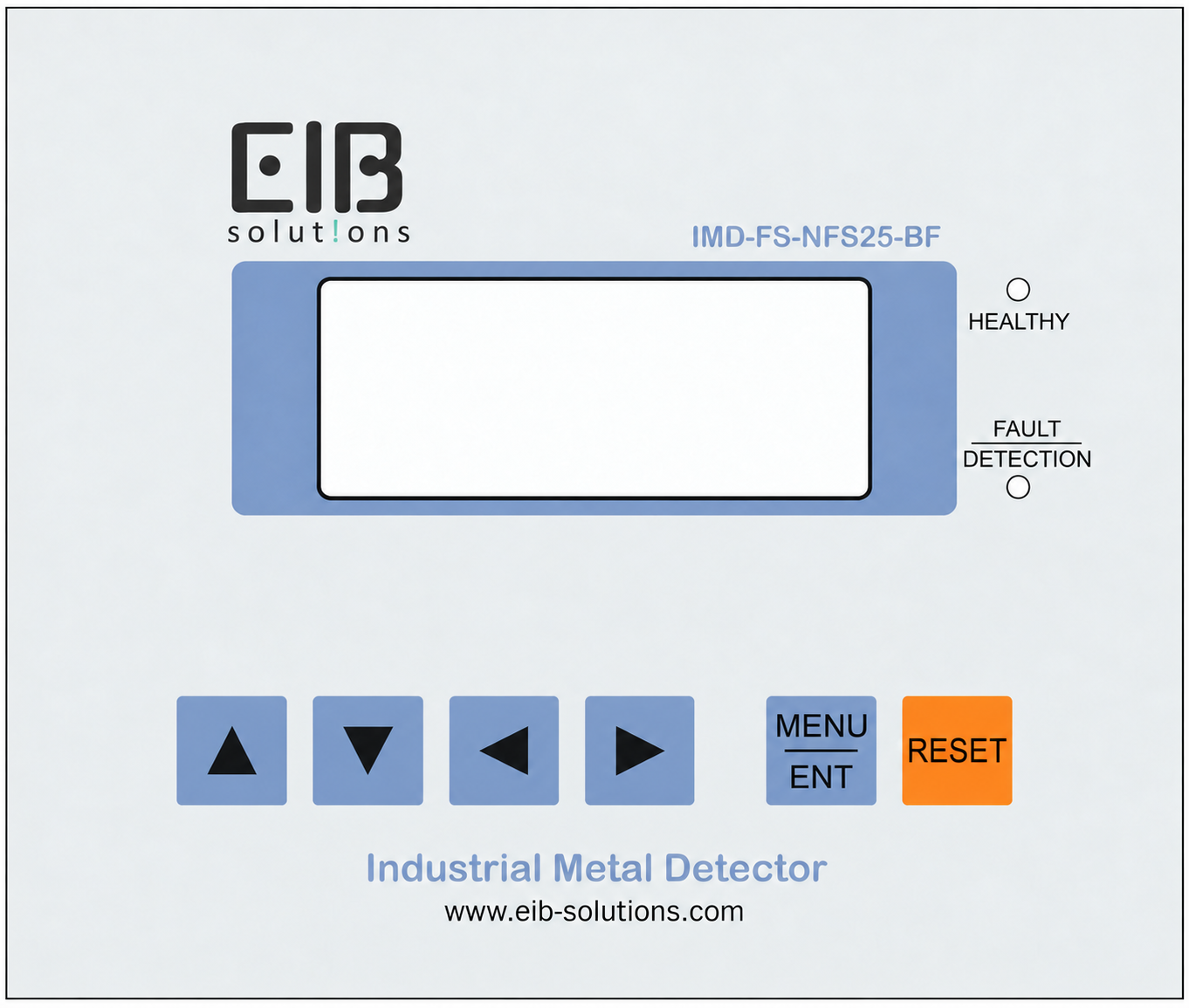
A detector PCB manages coil signals, processing, inputs and relay outputs. A separate display PCB mounts on the enclosure door through a specified panel cut-out.
Digital Detection Platform · DMD Rev 2.0
Metal Detection for High-Throughput Bulk-Material Conveyors
Purpose-designed for large conveyors carrying substantial material volumes at production speed. The DMD Rev 2.0 electronics platform helps EPC companies, conveyor OEMs and plant integrators add ferrous and non-ferrous metal detection to cement, coal and similar bulk-handling systems.
Primary Application
The detector is intended for bulk-handling installations where large quantities of material move continuously and at considerable belt speed. It gives turnkey EPC contractors and system integrators a configurable electronics platform that can be engineered into the conveyor, control panel and plant sequence.
For EPCs, OEMs & Machine Builders
The system separates the detector electronics and door-mounted display into two connected assemblies, giving project engineers freedom to design the search-coil structure, metal enclosure, cable routing and operator interface around the conveyor package.
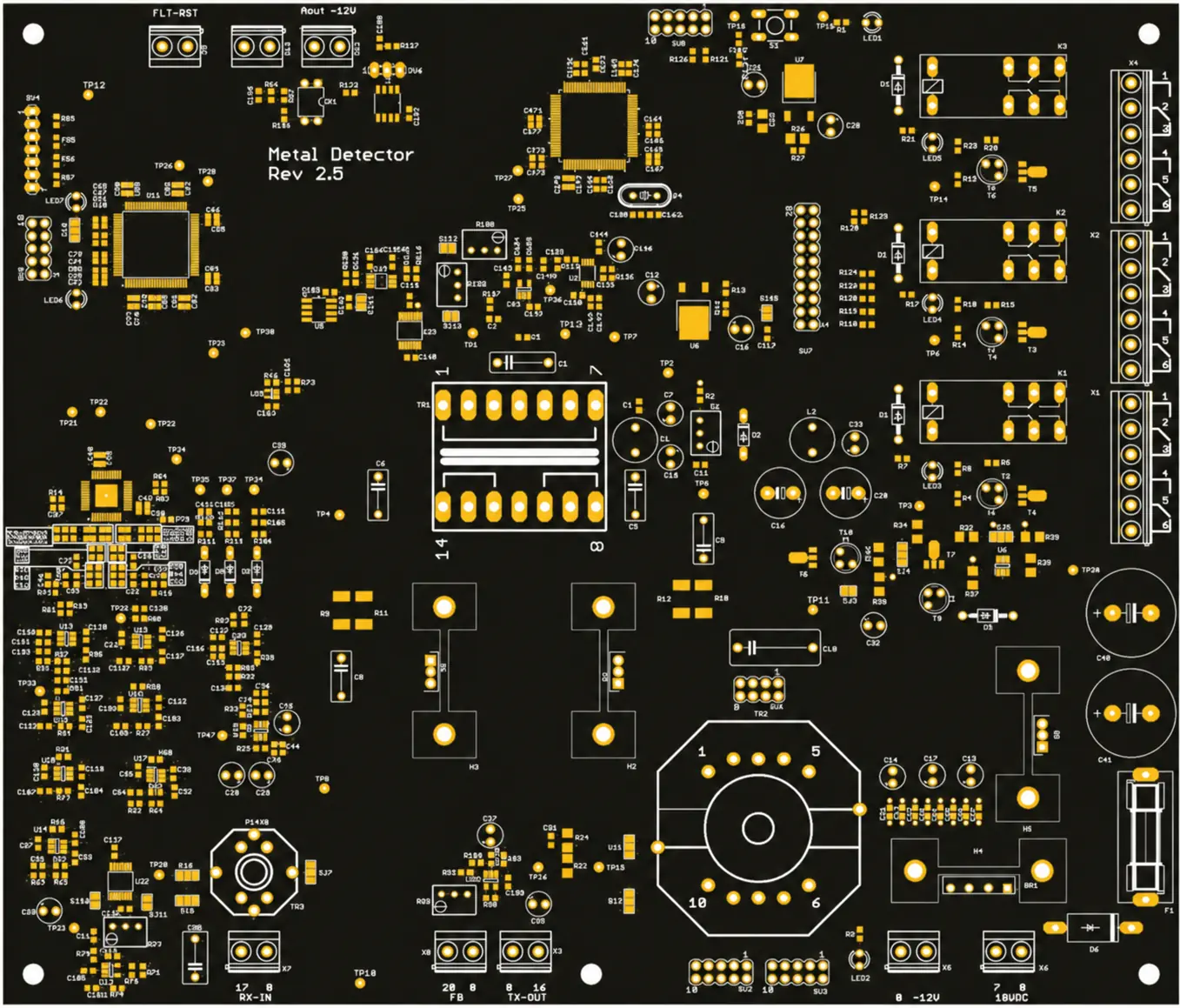 Detector and I/O Control PCB
A detector PCB manages coil signals, processing, inputs and relay outputs. A separate display PCB mounts on the enclosure door through a specified panel cut-out.
Physical dimensions and external terminal numbering support replacement of an existing detector system. Search-coil wiring can remain consistent, subject to application-specific tuning changes.
The detector electronics are intended for installation in a protective metal enclosure with suitable space, conduit entries and cable management for search coils and machine wiring.
Factory and field settings combine onboard tuning with display-based configuration. EIB can support coil matching, integration checks and onsite commissioning.
Operator Experience
The 4-line display guides normal operation, configuration and troubleshooting without requiring a separate computer.
At power-up the system checks the internal oscillator, transmitter feedback, transmitter output and tuning, and receiver-coil connection before normal operation.
The running screen presents ferrous amplitude, non-ferrous amplitude, programmed detection level and current system status.
Password-controlled editing provides access to 1–99% sensitivity, direct-output timing, delayed-output timing, rejection duration and master detection-counter reset.
A diagnostic screen displays transmitter output, ferrous and non-ferrous receiver levels, and feedback amplitude against commissioning thresholds.
Technical Data
Values below are taken from the supplied DMD Rev 2.0 user manual. Final detection performance depends on search-coil geometry, tuning, material, product aperture and operating conditions.
* Manual reference condition: approximately 45 cm vertical spacing between transmitter and receiver coils. Application performance must be validated with the actual aperture, conveyor, product and contaminant samples.
Installation & Commissioning
Detection performance depends on coil geometry, correct tuning, cable quality, earthing and the surrounding electrical environment. Final commissioning must be performed on the installed conveyor.
Keep the electronics cabinet within 100 m of the search coil and use 50 Ω coaxial cable with at least 100% shielding, following the approved cable specification.
Locate motors, magnets and other inductive electrical or electronic loads at least 15 m from the detector coils wherever the installation permits.
Earth the metal detector cabinet using a star connection. The system 0 V reference is bonded to earth; do not loop other equipment through this connection.
Use the diagnostic screen to verify transmitter output above 12 V RMS, AF and ANF receiver levels above 400 mV, and feedback above 1 V.
Application Engineering
EIB Solutions can adapt the electronics and support the complete integration path for new machines or retrofit projects.
Share the belt width, material, loading profile, belt speed, target contaminant, coil arrangement and required PLC or plant interface.